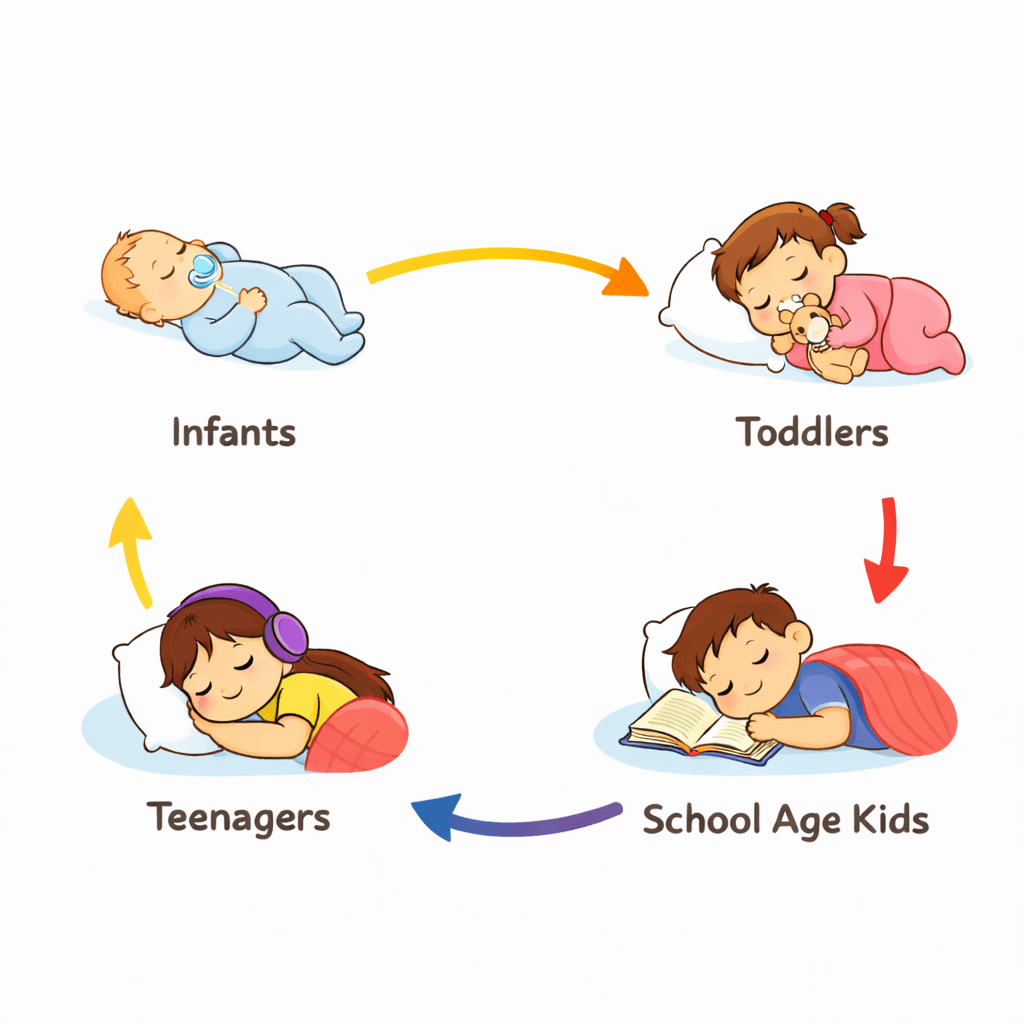
TABLE OF CONTENTS
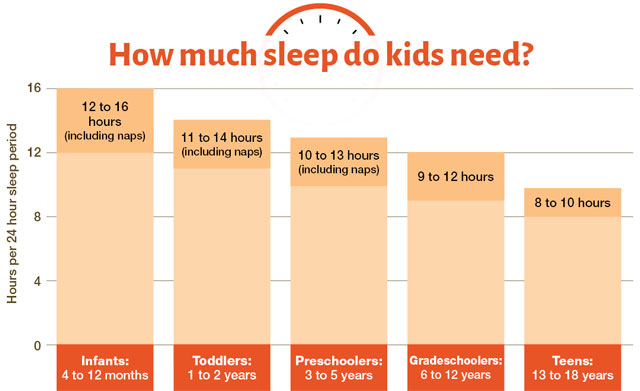
How Much Sleep Do You Need?
The most common question I get asked by parents across ALL AGES is
How do I get my child to sleep more?
Let me just remind you, you’re not alone. Let’s break down what is normal, what to expect, and discuss some helpful strategies and resources
Sleep Routines
Sleep Routines (Sleep Hygiene)
- Create a positive sleep environment
- No TV’s or gaming systems in the bedroom. Get out of the habit of having the TV on in the background while you sleep.
- Use your bed for SLEEP ONLY
- Adjust temperature to be slightly cooler at night
- Try to dim lights as much as possible in the bedroom before bedtime
- Create a routine
- Try to go to bed around the same time every night and wake up around the same time every morning, including weekends!
- Do things to naturally shut your brain down 1-2 hours before bedtime. This could include dimming lights around the house, playing relaxing music, turning off games, electronics, and cell phones
- A good night’s sleep begins in the MORNING!
- One of the first things you should do when you wake up is get some natural light exposure. Even 5 minutes makes a big difference! You can open up the windows, go outside, or roll down your window on your way to school or work and look at the sky. This works even on a cloudy day.
- It is also important to get outside during the day whenever possible, especially in the afternoon, and get some natural sunlight exposure.
For more, check out THIS ARTICLE from HealthyChildren.org from the American Academy of Pediatrics
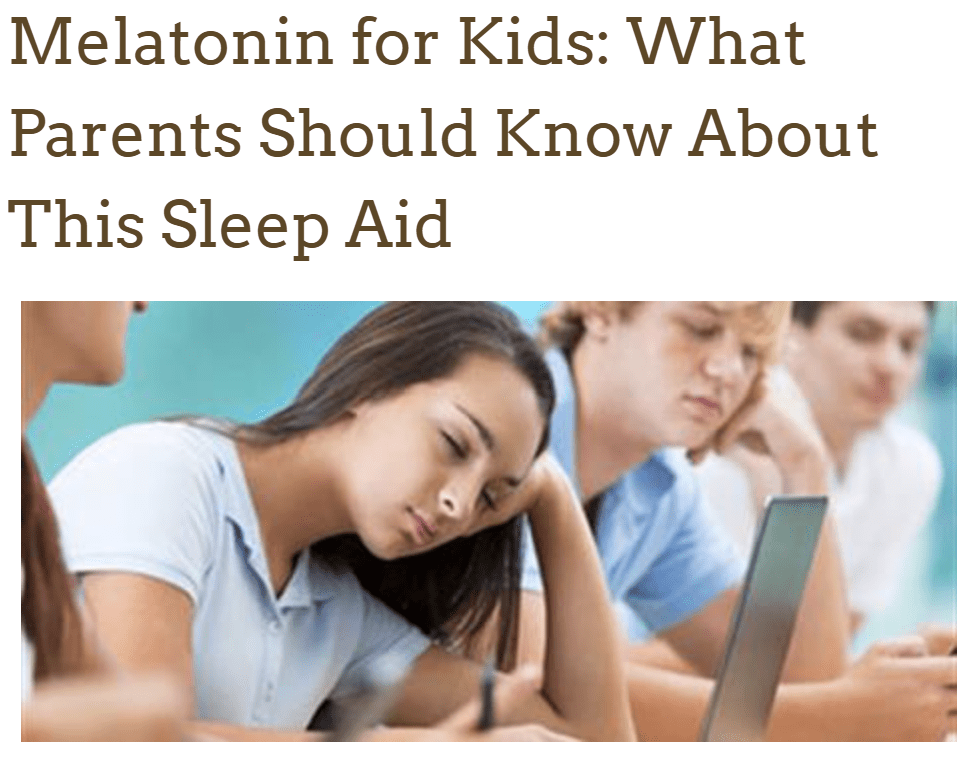
MELATONIN
Please be CAUTIOUS with melatonin use. Melatonin is NOT a sleeping pill. Rather it is a hormone produced naturally by the pineal gland in the brain that acts as a circadian rhythm REGULATOR. Think of it like the on switch that triggers a circadian rhythm reset that starts with sleep. For a deep dive into how melatonin works in the body, check out THIS ARTICLE found on PubMed.
In addition, Melatonin sold over the counter is often wildly overdosed! The human body naturally produces about 0.4-0.8mg of melatonin in the evening, but most supplements contain 5-10mg and even up to 20mg of melatonin in a single tablet. That’s up to 10-50 times more than what is made naturally. While melatonin often is safe without significant side effects and is a low risk for overdose, taking significantly more than what your body naturally would produce can really throw off your normal circadian rhythm, especially if you don’t time it correctly.
The body typically releases melatonin towards the end of the day as the sun goes down, and increases gradually throughout the night, building up sleep pressure and triggering sleep as mentioned above. If taking melatonin, the ideal timing is about 1-2 hours before bedtime around the same time it starts to get dark. Also, as mentioned above, you probably only need a small amount of melatonin, around 0.5-1mg, which is much less than what is typically sold over the counter.
And PLEASE, PLEASE, PLEASE DO NOT USE GUMMIES!!! Gummies stick to your teeth and can easily cause cavities, especially in kids who already struggle to brush their teeth thoroughly.
For more, check out the following articles:
MAGNESIUM
In my opinion, a much better alternative to Melatonin is MAGNESIUM! Specifically MAGNESIUM GLYCINATE (or bisglycinate) which is more easily absorbed compared to other forms of magnesium such as oxalate, malate, citrate, etc. While more research is always needed, some recent studies have shown magnesium to be effective in improving sleep quality and duration. Magnesium is also known to help with muscle recovery and cramps, help improve restless leg syndrome, and is a long-standing treatment for constipation. Always check with your doctor for specific dosing guidance, but typical dosing recommendations are as follows:
– 100mg young children (under age 6-8)
– 200mg older children (under age 12-15)
– up to 350mg teenagers and adults
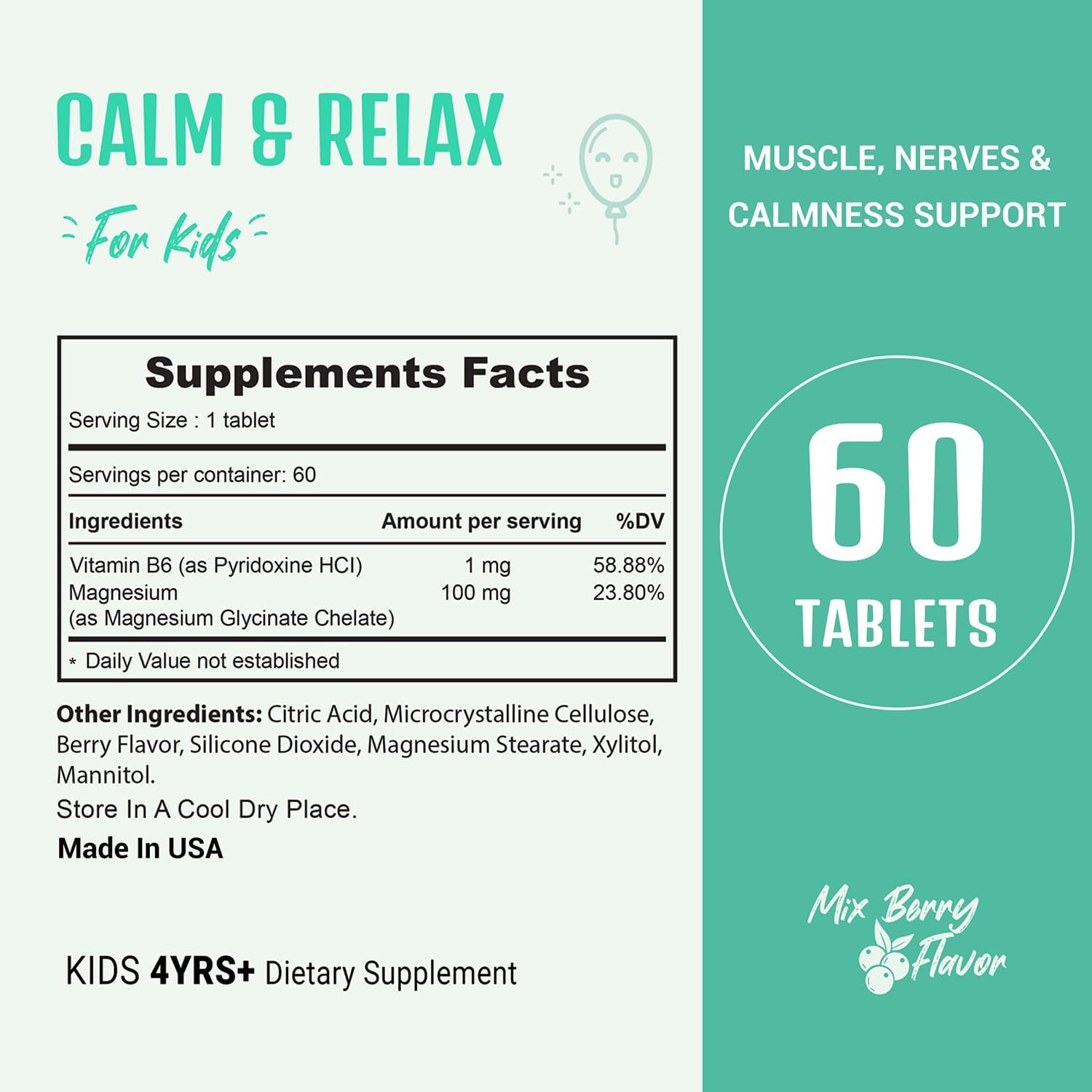
As with melatonin, PLEASE, PLEASE, PLEASE DO NOT USE GUMMIES!!! Gummies stick to your teeth and can easily cause cavities, especially in kids who already struggle to brush their teeth thoroughly. Look for sugar-free chewable tablets with Xylitol and other safe ingredients for teeth.
Also, I recommend that you avoid combination tablets with Vitamin D. It has been reported that taking Vitamin D at night can interfere with sleep and cause circadian rhythm disruptions since Vitamin D production naturally occurs after sun exposure during the day.
Vitamin B6 is often included in Magnesium supplements since it can aid with serotonin and melanin production, improving sleep. At high doses, however, B6 can cause an increase in energy and disrupt sleep.
Here are some supplements that I have found and use personally that meet the above criteria:


SMART BULBS
A couple years ago, every time I went grocery shopping, I purchased 1-2 smart bulbs. Over the course of about a year, I replaced almost every light in my house with a smart bulb and created a LIGHT ROUTINE! I timed my artificial lighting to align with sunrise, sunset, and bedtime. During the day, the lights are programmed to be a bright daylight white, and in the evening, a more dim, soft light. At bedtime, I have the non-critical lights turn off completely. I even have the bedroom lights change to purple, just light enough to navigate without tripping, but dark enough to begin a subconscious wind-down.
While this may not be possible for you to implement in your home, you can certainly turn off lights throughout the house, use lamps instead of overhead lights, and create a routine that works for you and your family to naturally and subconsciously begin winding down each night.
Here are some of the SMART BULBS I have purchased for reference:


Infants
Infants

Sleep Schedules

Common Problems



Taking Cara Babies
One of the most highly recommended sleep resources! Founded by a pediatric nurse mom and a pediatrician dad, they provide high quality information and real-life practical information.

Check out their affordable (and worth the price) newborn sleep class
Toddlers
Toddlers
Sleep Schedules


Common Problems

School Age
School-age
ROUTINES, ROUTINES, ROUTINES! See Above


Teens
Teens
ROUTINES, ROUTINES, ROUTINES! See Above
Unique Situations
Unique Situations
COMING SOON!
Will include sleep tips unique to various conditions including Autism, ADHD, other Medical diagnoses, and more!
When to See Your Doctor
When To See Your Doctor
More details to come, but if your child is experiencing snoring with apnea (gasping for air), not sleeping well due to an acute illness, waking up frequently due to cough or shortness of breath, sudden behavior changes, or other sleep-related concerns, have your child evaluated.
Snoring / Apnea
Daytime fatigue
Behavior changes
Unable to fall asleep
Resources
Resources

The Sleep Foundation
More to come!
Social Media
Books
Education
Support
Etc.








 The Pediatrician's Corner
Leave a comment